


Food for thought
Best wholesale Wonder THC chocolate bars to stock in 2026
Nov
There is no supported Wonder THC chocolate-bar ranking in this catalogue: the Wonder chocolate listings identify psilocybin, not THC. If you searched for wonder thc chocolate bars wholesale in 2026, start with that distinction—this guide explains the product names, cannabinoid information and Canadian regulatory checks that prevent a category error.
- The wonder thc chocolate bars wholesale query conflates Wonder psilocybin chocolate with THC chocolate.
- Bodegadistro lists Wonder psilocybin chocolate and separate Potluck THC chocolate products.
- Wonder’s 1g, 3g and 6g title figures do not establish THC content.
- Health Canada limits edible cannabis to 10mg THC per immediate container.
- A catalogue listing does not establish authorization for Canadian retail sale.
Why this matters
THC chocolate and psilocybin chocolate are different product categories. They contain different controlled substances and fall under different regulatory frameworks in Canada. Treating the names as interchangeable creates an error before any product comparison begins.
Bodegadistro’s catalogue separates Wonder psilocybin chocolate from Potluck THC chocolate. That distinction matters more than flavour, format or the largest number on a product title. Bodegadistro’s Wonder chocolate listings describe psilocybin products, not a verified Wonder THC chocolate range.
For a 2026 product-information review, the first question is therefore not which Wonder THC bar ranks highest. It is whether the product actually contains the substance named in your search—and whether the documentation supports that classification.
What makes a valid THC chocolate comparison?
A defensible comparison starts with product identity. Use these criteria before treating any chocolate listings as equivalent:
- Active substance: Establish whether the product contains THC, CBD, psilocybin or another substance. Chocolate describes the food format, not its active ingredient.
- Measurement basis: Separate ingredient weight, total chocolate weight and active-substance content. A gram figure alone does not identify potency.
- Container content: Distinguish the amount in an individual piece from the amount in the entire immediate container.
- Regulatory status: Check the applicable Canadian product rules and the authorized supply framework. A product title is not regulatory evidence.
- Supporting documentation: Match the current label, ingredient information and relevant testing records to the exact product and lot.
- Comparable scope: Compare like with like. Do not place psilocybin chocolate and THC chocolate in one potency ranking.
These criteria prevent a polished table from presenting unlike products as substitutes. A flavour match is not enough: milk chocolate containing psilocybin is not equivalent to milk chocolate containing THC.
Wonder and THC chocolate at a glance
The following table classifies examples from the supplied catalogue. It is an identification reference, not a buying recommendation or confirmation of legal retail eligibility.
| Catalogue example | Substance identified in the listing | Figure in the title | What the listing establishes | Key limitation |
|---|---|---|---|---|
| Wonder Psilocybin Chocolate Bar – Blood Orange 1g | Psilocybin | 1g | A Wonder chocolate listing explicitly named as psilocybin | The title does not establish THC content or active psilocybin concentration |
| Wonder Psilocybin Chocolate Bar – Blood Orange 3g | Psilocybin | 3g | Another size designation within the named Wonder range | The gram figure is not a verified THC measurement |
| Wonder Psilocybin Chocolate Bar – Blood Orange 6g | Psilocybin | 6g | A larger numerical designation in the product title | The title alone does not establish a standardized active-substance amount |
| Potluck – Milk THC Chocolate 300mg | THC | 300mg | A separate brand’s chocolate explicitly identified as THC | The title does not establish compliant Canadian edible-cannabis packaging |
The catalogue supports a distinction between Wonder psilocybin chocolate and Potluck THC chocolate—not a ranking of Wonder THC bars. The table also shows why a larger title figure cannot serve as a shortcut for product suitability.
1. Wonder chocolate: identify the substance before the flavour
Wonder chocolate titles in the catalogue explicitly name psilocybin. Examples include Blood Orange, Dark Chocolate, Hazelnut, Milk Chocolate and S’mores. Those flavour names describe variations within the listed chocolate range; they do not turn the products into THC edibles.
Best use of this information: Correcting product taxonomy and answering substance-identification questions.
What the listings clarify:
- The full Wonder product names identify psilocybin.
- Several flavours appear with 1g, 3g and 6g designations.
- Wonder chocolate is distinct from the separately named Potluck THC chocolate range.
What the listings do not establish:
- A Wonder THC chocolate formulation.
- The measured concentration of active psilocybin in each listed bar.
- Authorization for ordinary Canadian retail sale.
For your 2026 reference materials, retain the full substance name rather than shortening everything to chocolate edibles. Removing the word psilocybin from a product record removes the most important classification detail.
Verdict: Skip the Wonder THC label; classify the listed Wonder chocolate as psilocybin chocolate.
2. Potluck THC chocolate: a separate category, not a Wonder substitute
The catalogue includes Potluck chocolate products explicitly named as THC chocolate. Examples include Milk, Salted Dark, Matcha White and Toffee (SKOR), each carrying a 300mg designation in its supplied title. These names establish a different stated substance category from the Wonder listings.
Best use of this information: Distinguishing THC-labelled chocolate from psilocybin-labelled chocolate.
What the listings clarify:
- THC appears directly in the Potluck chocolate names.
- The stated title designation is 300mg.
- Potluck and Wonder are separate named product ranges.
What the listings do not establish:
- That the title figure represents the contents of a compliant immediate container.
- The number of pieces or their individual THC content.
- That a product is authorized within a particular provincial retail framework.
Do not treat this distinction as an endorsement or a substitution recommendation. It answers a narrower factual question: which supplied chocolate names actually identify THC?
Verdict: Hold any compliance conclusion until the exact packaging and product documentation have been checked.
How this assessment is organized
This assessment prioritizes substance identity, measurement basis and regulatory classification. Flavour and numerical size designations come afterwards because neither resolves whether a product is THC chocolate or psilocybin chocolate.
No sensory testing, laboratory comparison or retail performance data supports a best-overall ranking here. Assigning a winner would turn a naming mismatch into an unsupported recommendation. The useful outcome is an accurate category distinction.
Read grams and milligrams without mixing them up
A gram measures mass. A milligram also measures mass, but at a different scale: 1g equals 1,000mg. That conversion does not tell you what substance the mass refers to.
For example, a chocolate title containing 3g does not by itself establish 3g of pure psilocybin, 3g of chocolate or any amount of THC. You need the product’s actual measurement basis. Converting the title figure into milligrams without identifying the measured material creates false precision.
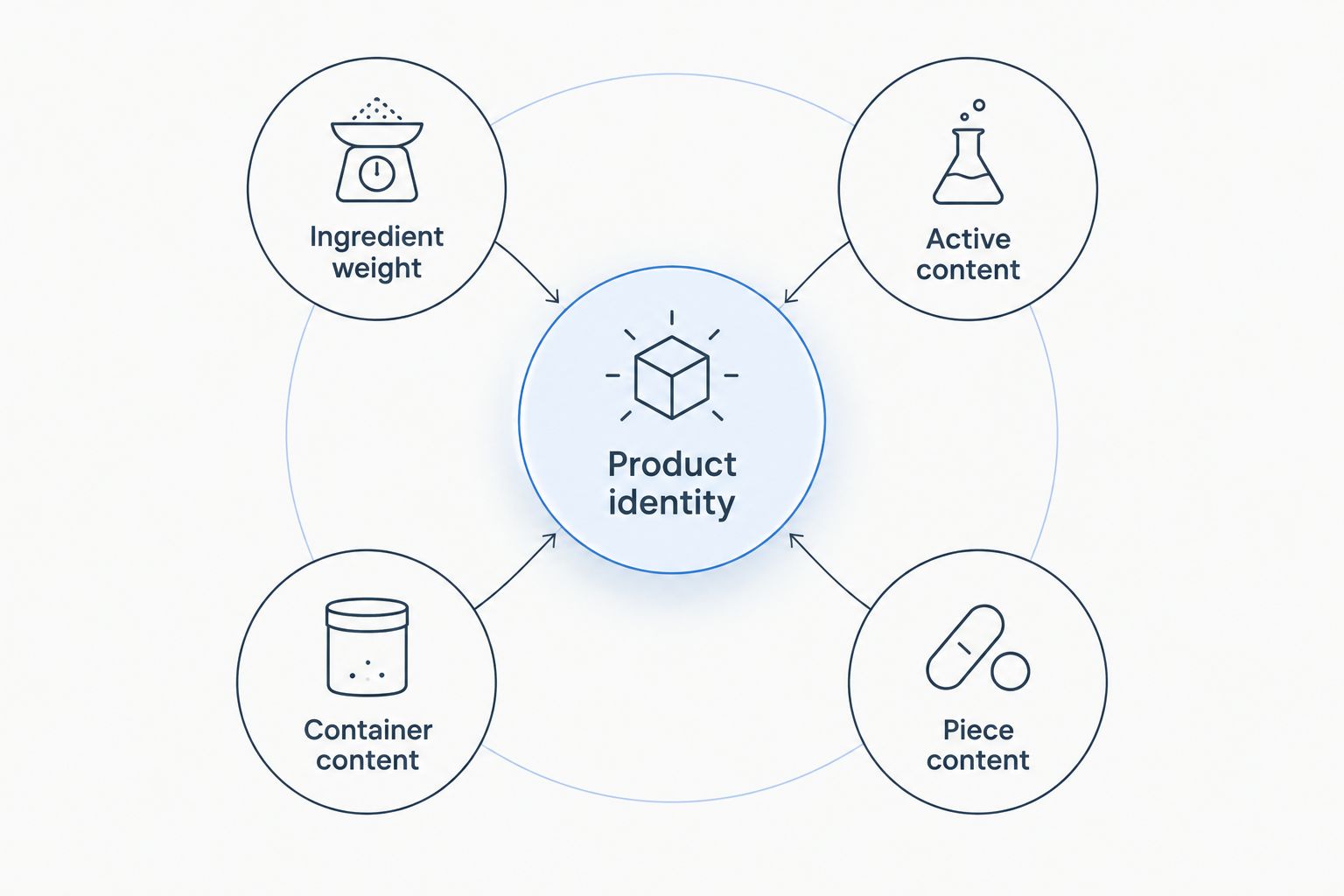
Keep these fields separate in any product-information record:
- Product identity: The complete product name and stated active substance.
- Ingredient weight: The mass of the ingredient being described, when documented.
- Active content: The measured amount of THC, CBD or another relevant compound.
- Container content: The total active content in the immediate container.
- Piece content: The documented active content in an individual piece.
A single title figure cannot reliably fill all five fields. Where the label supplies different measurements, preserve their units and scope rather than compressing them into one potency column.
Canadian rules: THC edibles and psilocybin are not interchangeable
For a 2026 Canadian compliance review, Health Canada’s Cannabis Regulations provide the relevant federal framework for edible cannabis. Edible cannabis is subject to a maximum of 10mg THC per immediate container. That is a container limit, not permission to place multiple higher-content pieces inside one container.
This rule makes the distinction between a title designation and verified packaging essential. A catalogue title showing 300mg does not demonstrate that the product meets the edible-cannabis requirements. Nor does dividing a stated total into smaller pieces establish compliance with the immediate-container limit.
Psilocybin falls under a different framework. Health Canada identifies psilocybin and psilocin as controlled substances under the Controlled Drugs and Substances Act. Certain authorized pathways exist, including clinical trials, the Special Access Program and applicable exemptions; these do not create general authorization for ordinary retail sale.
A cannabis retail licence does not, by itself, authorize psilocybin sales. Keep the two regulatory questions separate, even when both substances appear in chocolate products.
Source scope: Health Canada’s Cannabis Regulations govern the federal edible-cannabis requirements discussed here; Health Canada’s information on psilocybin and psilocin explains their controlled status and authorized access pathways. Check the current requirements applicable to your circumstances in 2026.
A product-information check that prevents the wrong comparison
Use a documentation-first sequence when reviewing an ambiguous chocolate listing. The purpose is to resolve identity and compliance questions, not to infer them from a brand name.
Start with the complete name
Record the exact name, including THC, CBD or psilocybin where stated. Keep the flavour separate from the substance field. A shortened description such as Wonder chocolate is insufficient for substance classification.
Match the label to the listing
Check that the actual packaging identifies the same product and substance as the catalogue record. Resolve discrepancies before repeating product claims in educational materials or internal reference documents. A familiar flavour name does not resolve a mismatch.
Identify what each number measures
Ask whether a figure describes ingredient mass, active content, piece content or container content. Retain the original unit beside the figure. Do not convert a mushroom-weight designation into an active-psilocybin claim.
Separate evidence from assumptions
A statement that a product is tested is not a substitute for the relevant report. Any testing record used to support a claim needs to correspond to the product and lot in question. Do not extend a result from one formulation to another without supporting evidence.
Keep regulatory status explicit
Record the basis for any conclusion about lawful handling or retail eligibility. Treat an unresolved status as unresolved. A website listing, a brand description or an account relationship does not replace the applicable authorization.
Which category should you use for this search?
Use psilocybin chocolate when describing the supplied Wonder chocolate listings. Use THC chocolate only for products whose documentation identifies THC. That is the default distinction for an undecided reader.
Bodegadistro’s chocolate catalogue contains both substance categories, but their presence in one catalogue does not make them interchangeable. Keep separate reference records, separate regulatory questions and separate explanations of the units used.
For 2026 content planning, avoid repeating the search phrase as if it were a verified product category. Answer the wording directly, then correct it. An accurate explanation serves the reader better than an invented best-of list.
FAQ
Does Wonder make the THC chocolate bars shown in this catalogue?
The supplied Wonder chocolate listings identify psilocybin, not THC. The catalogue does not support describing those products as Wonder THC chocolate bars.
Why does a search for wonder thc chocolate bars wholesale need clarification?
The phrase combines Wonder’s listed psilocybin chocolate range with a different substance category, THC. Identify the active substance before comparing chocolate products or interpreting their title figures.
Are Wonder chocolate and Potluck THC chocolate the same category?
No. The supplied Wonder chocolate names identify psilocybin, while the Potluck THC chocolate names identify THC. A shared chocolate format does not make their contents or regulatory treatment equivalent.
Does 3g on a Wonder chocolate title mean 3g of THC?
No. A 3g title designation does not establish any THC content. The product documentation must identify what material the gram figure measures.
What is Canada’s THC limit for edible cannabis?
Health Canada’s Cannabis Regulations limit edible cannabis to 10mg THC per immediate container. The container limit is distinct from the amount in an individual piece.
Can a Canadian cannabis retail licence authorize psilocybin chocolate sales?
A cannabis retail licence does not by itself authorize psilocybin sales. Psilocybin is controlled under a separate federal framework, and authorized access pathways do not establish general retail permission.
Does a product listing prove that a chocolate bar is compliant?
No. A catalogue listing does not establish regulatory compliance or retail eligibility. Check the actual product, packaging, documentation and applicable authorization.
What should a product-information record say about Wonder chocolate?
A product-information record should preserve the full supplied name, including psilocybin where stated. Record the measurement basis separately rather than interpreting a gram designation as THC content.
One last thing
The biggest classification error can be a missing word rather than a wrong number. Removing psilocybin from a Wonder chocolate description leaves the flavour intact but removes the fact that determines which substance category you are discussing.
Keep the substance in the name and the unit beside the measurement. Those two habits prevent an ambiguous search phrase from becoming an inaccurate product claim.
